Why the Gap Between B2B and B2C Marketing Is Smaller Than We Think

Why the Gap Between B2B and B2C Marketing Is Smaller Than We Think
For years, marketers have been taught to treat B2B marketing and B2C marketing as if they belong to two completely different worlds.
One is supposed to be rational, technical, and serious.
The other is emotional, creative, and fast-moving.
One targets businesses.
The other targets people.
But that’s exactly where the misconception begins.
After working across both B2B and B2C marketing time frames, I came to a realization that completely changed how I approach campaigns: B2B customers are still human beings before they are buyers, decision-makers, or procurement managers. They scroll through LinkedIn, Instagram, YouTube, and industry platforms. They react emotionally to content. They form opinions about brands long before they fill out a lead form or request a demo.
And once I understood that, my results changed too.
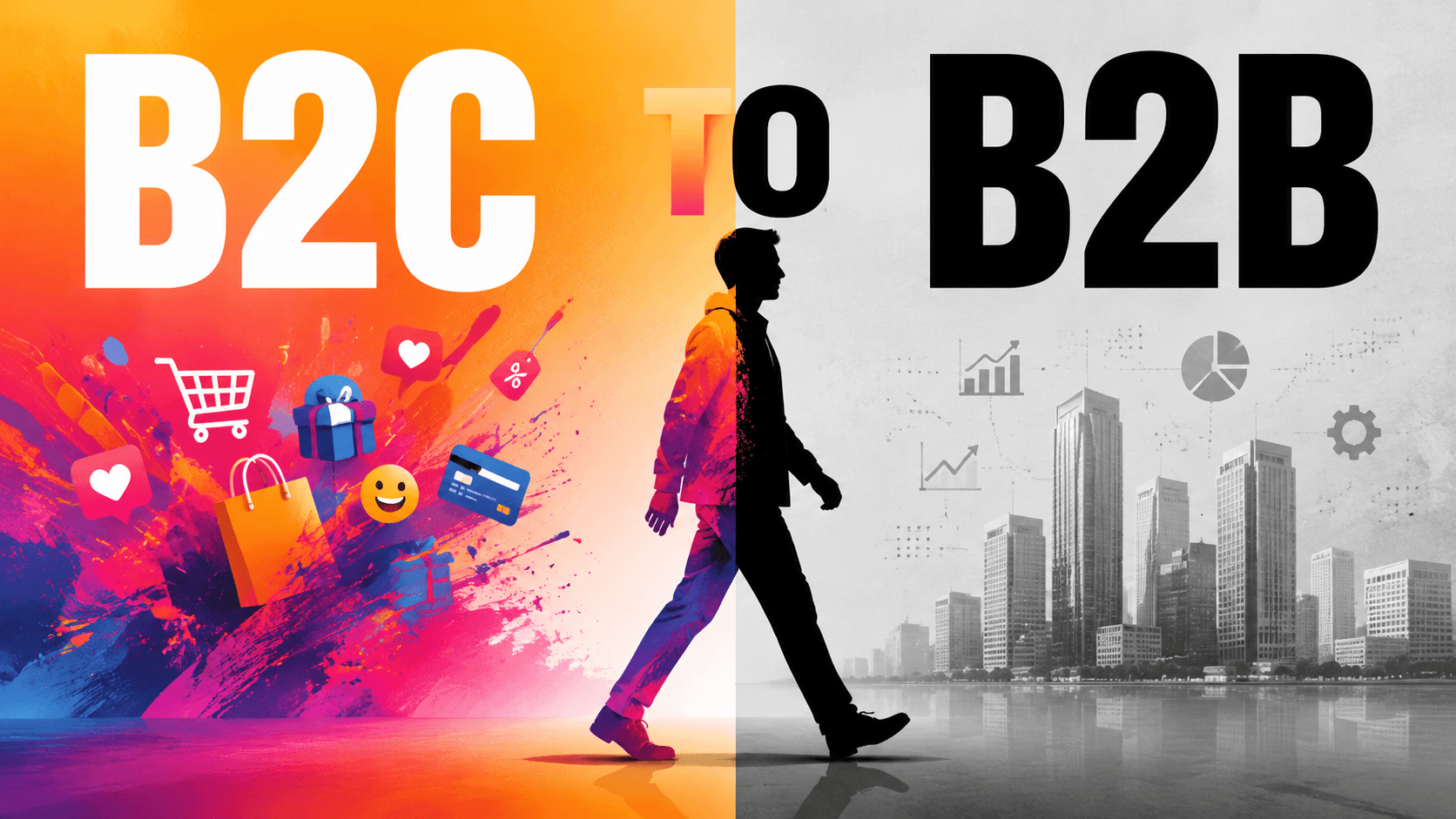
The Common Misconception About B2B Marketing
One of the biggest myths in modern marketing is that B2B marketing must be dry, practical, and purely informational, while B2C marketing is where creativity, storytelling, and emotional appeal belong.
I used to believe that too.
Early on, I approached B2B campaigns with a very rigid mindset. My assumption was simple: if the audience is made up of businesses, then the messaging should focus only on specifications, ROI, technical benefits, operational efficiency, and hard facts. I thought professionalism meant stripping away personality. I thought effectiveness meant being purely rational.
So the campaigns were structured, polished, and informative — but often too cold.
At the same time, when working on faster-paced campaigns with more B2C-style dynamics, I noticed something very different. Messaging that connected emotionally, sparked curiosity, or created a memorable impression tended to drive much stronger engagement. It didn’t just inform people; it made them feel something.
That contrast forced me to rethink everything I had assumed about B2B vs B2C marketing.
My Turning Point: Realizing That B2B Buyers Are Still People
The real shift happened when I stopped seeing the audience as “companies” and started seeing them as people inside companies.
That sounds obvious, but it changes everything.
A B2B buyer may be a channel partner, facility manager, consultant, procurement lead, or C-level stakeholder — but they are also someone who consumes content every day. They compare brands. They judge tone. They remember what feels relevant, modern, and trustworthy. They are influenced not only by logic, but also by perception, confidence, familiarity, and emotional resonance.
In other words, the B2B buyer journey is still deeply human.
That insight changed my strategy. Instead of creating campaigns that were only technical and product-centered, I started building content that balanced both sides:
The rational side, such as performance, efficiency, ROI, and application.
The emotional side, such as trust, credibility, ambition, confidence, innovation, and relevance.
I didn’t abandon practical messaging. I made it more relatable.
From Dry Product Messaging to Human-Centered Marketing
Once I shifted my mindset, the execution changed too.
Rather than treating B2B content marketing as a formal product brochure in digital form, I started thinking more like a modern marketer and less like a catalog writer. I asked better questions:
What would actually make someone stop scrolling?
What kind of story would make this product feel meaningful, not just functional?
How can we present technical value in a way that feels relevant to real business pain points?
How do we make our brand memorable, not just visible?
This led to more dynamic campaign creative, stronger hooks, sharper copy, and messaging that spoke to both business needs and human motivations.
For example, instead of only highlighting features, we framed the product around outcomes: peace of mind, confidence in operations, growth enablement, reduced risk, and smarter decision-making. Instead of pushing information alone, we built messaging that helped the audience imagine themselves benefiting from the solution.
That’s where B2B lead generation became more effective — because the content didn’t just explain the product. It connected.
Different Time Frames, Same Human Psychology
One of the most valuable lessons from handling both B2B and B2C marketing across different campaign cycles is this: the timelines may differ, but human psychology does not.
In B2C marketing, the conversion path is often shorter. The content must attract attention quickly, trigger interest, and drive immediate action. The emotional element is obvious because the purchase is often personal and direct.
In B2B marketing, the sales cycle is usually longer. There are more stakeholders, more consideration stages, and more emphasis on proof, trust, and long-term value. But even in that longer cycle, emotion still plays a role.
It shows up differently:
In whether the brand feels credible.
In whether the audience remembers the campaign.
In whether a decision-maker feels confident sharing the solution internally.
In whether the messaging creates trust early enough to keep the brand in the consideration set.
That’s why I no longer see B2B and B2C marketing as opposites. I see them as different expressions of the same principle: people buy with logic and emotion, even when they justify the decision with data.
What Changed When I Changed My Strategy
The most rewarding part of this shift was not just creative satisfaction — it was performance.
When the campaigns became more human, more engaging, and more emotionally intelligent, they started performing better.
We saw stronger audience interaction, better engagement with campaign assets, and most importantly, more qualified leads. The messaging had more stopping power. The brand felt more approachable and memorable. The campaigns didn’t just communicate value — they created connection.
And connection matters in B2B marketing strategy more than many teams admit.
Because before someone downloads your brochure, submits a form, speaks to sales, or recommends your solution internally, they have already formed an impression of your brand.
That impression is rarely built on logic alone.
Why Modern B2B Marketing Needs More Emotion, Not Less
Today, the lines between B2B digital marketing and B2C digital marketing are becoming increasingly blurred.
We live in a world where business audiences are exposed to exceptional content every day. They see strong branding, sharp storytelling, smart design, short-form video, thought leadership, and personalized experiences across every platform they use. That naturally raises expectations for all brands, including B2B brands.
If your B2B marketing campaign still sounds like a technical manual while the rest of the world communicates like humans, your content will likely be ignored.
Modern B2B marketing doesn’t need less professionalism. It needs more humanity.
It needs storytelling with substance.
It needs strategy with personality.
It needs data with emotion.
It needs clarity without losing creativity.
That’s the real opportunity.
The Lesson I Took With Me
Looking back, one of the most important lessons in my marketing journey was unlearning the belief that B2B marketing must be purely practical.
Yes, business buyers care about value, ROI, reliability, and performance. Of course they do. But they also care about trust, relevance, confidence, and how a brand makes them feel. They are not robots making spreadsheet-only decisions. They are people navigating crowded markets, internal pressures, competing priorities, and constant digital noise.
And when marketing speaks to both the mind and the emotion, it becomes much more powerful.
That shift in perception helped me create campaigns that were not only more engaging, but also more effective. It helped turn product messaging into audience connection. And ultimately, it helped generate better results, stronger lead flow, and more successful campaigns.
The biggest misconception about B2B vs B2C marketing is that one speaks to companies and the other speaks to people.
In reality, both speak to people.
The only difference is the context.
date published
May 12, 2026
reading time
5 min read